
Through brands and their intangible values, we can reach audiences in a powerful and lasting way over time. Without it, there is no credibility. What process occurs for credibility to crystallize? Read similar: The constant evolution of the digital era
Create value. A fundamental process for brands that need to be focused on user experience and benefits for the clients. Then the product to satisfy these needs and then the brand will validate and sustain over time. Steve Jobs summarized it lucidly and concretely in the following video. We could add a point of view on the importance of a good user experience and brand credibility for digital media brands: a media brand without credibility will not last long, and a bad user experience on its online edition will be catastrophic.
Credibility and news
Traditional media, which should be ready to face the new communities and generate content in the digital world, have not made the «net effect». Brands have lost their credibility, but also they have lost the construction of meaning and validation of news. For example, research from Gallup and Knight Foundation manifests what many Americans think. Traditional media is here to cheat on us. Once this idea is present, for whatever reason, credibility is no longer a value that can be sustained for a long time.
Maybe the information overload has saturated us. Since social media has massified in the new hyper-connected world, the information has been saturated too. But American citizens, for example, tend to inform themselves with local media. The more near we are, the more confidence we have in what we read. The net effect is capable of sustaining with proximity.
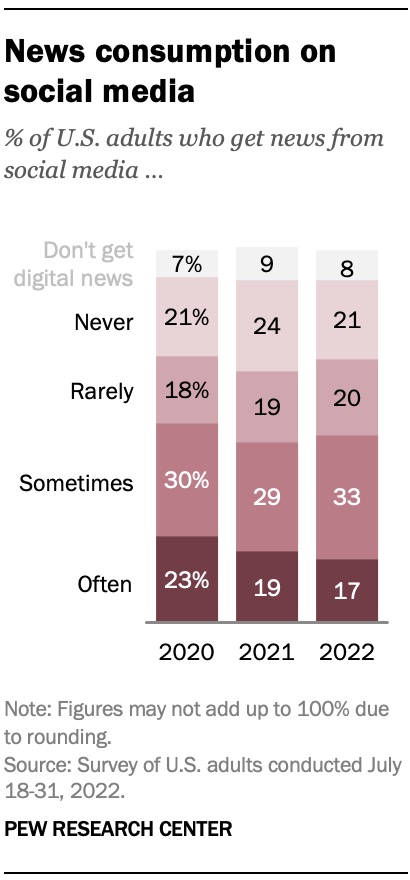
More than 50% of the audience choose to get informed by social media. A large part of this audience belongs to the under-30 spectrum. Not a surprise that many of these people are part of the new audiences responding to the new ways of information.
Alphabetization and media
One of the effects that have developed in this new era is fake news. We don’t believe anything we see. Although the majority of students seem worried about fake news, only 40% of them check what they read Not only we must check what we read but also, in the process, we must understand what type of news are we reading. The closer and inside of it we are, the more likely we are to recreate facts as they are given. The hyper-connected world seems to check what is impossible to check. Not the best informative experience.
Modern alphabetization adjusts various abilities that foment the critic’s thoughts on the use of modern media. This way, we are going to recreate journalists that are more and better prepared. Also, we get the audience nearer to the content and make it credible. Create the network to generate the net that sustains them. Every reader could feel unique if they found an aggregated value in the information. In constant change, media and audiences must readapt to analyze the content that they are part of. Certain paradigms have changed logics. Today information and news get to the audience without them looking, at a variety of channels and media. Without credibility in this scenario, the brand will get lost really quickly.